

You can't design a service if you don't know why you’re delivering it
Without a clear sense of why our services exist, it's easy for our services to 'go through the motions' while never achieving what we set out to do
In our latest episode of the Bad Services podcast, we explore the most commonly overlooked enabler for good services: Purpose.
Every service has a purpose. For public services, social enterprises, healthcare and charities, this is often something we take for granted, but for commercial services, the same is true. There is always a reason why we do what we do - beyond the fact that we either have the skills to deliver it, or that it's commercially lucrative. It's this purpose that provides value to our users.
Whether our purpose is that we want to help more people get into cycling, have better control over their finances, respond to the climate crisis more effectively, or get access to affordable, adaptable swimwear, it's our purpose that tells us what services we might create to deliver that outcome, and who our users might be.
Purpose is a vital ingredient of service design, next only to knowledge of what our user’s need from us. It's also the one ingredient we perpetually forget when we’re designing services.
If you’ve ever tried to design a service without knowing what that service was supposed to achieve, you’ll know that is incredibly difficult, but frighteningly common.
The reason why our service was created might be something that was written down a long time ago, by people who feel very far away from us now. Sometimes it gets lost in the process of an idea being chucked over the fence from the person who devised it to us.
Even if our purpose was clear at the outset, over time we naturally focus more on ‘how’ we deliver the service that achieves that outcome, rather than ‘why’ we're doing it. Slowly over time our purpose gets shrunk in the wash, going from a value we bring to our users, to ‘be better at doing that thing we already do’
The result? It becomes incredibly hard to work out what success looks like for our service, and increasingly hard to ask that question.
The most obvious impact of this is that we deliver services that dont deliver the intended outcome we have. But we can go one step further and end up with services that have unintended consequences that actively go against their purpose (the recent carers allowance scandal in the UK is a perfect example of this).
We can also continue to provide services in the same way over time, despite dramatic changes in user demand, meaning we dont recognise new purposes of our services as they develop. Over time we define our services by what we currently have the skills or processes to deliver, rather than the best way of achieving your purpose, meaning we miss new market opportunities or user needs.
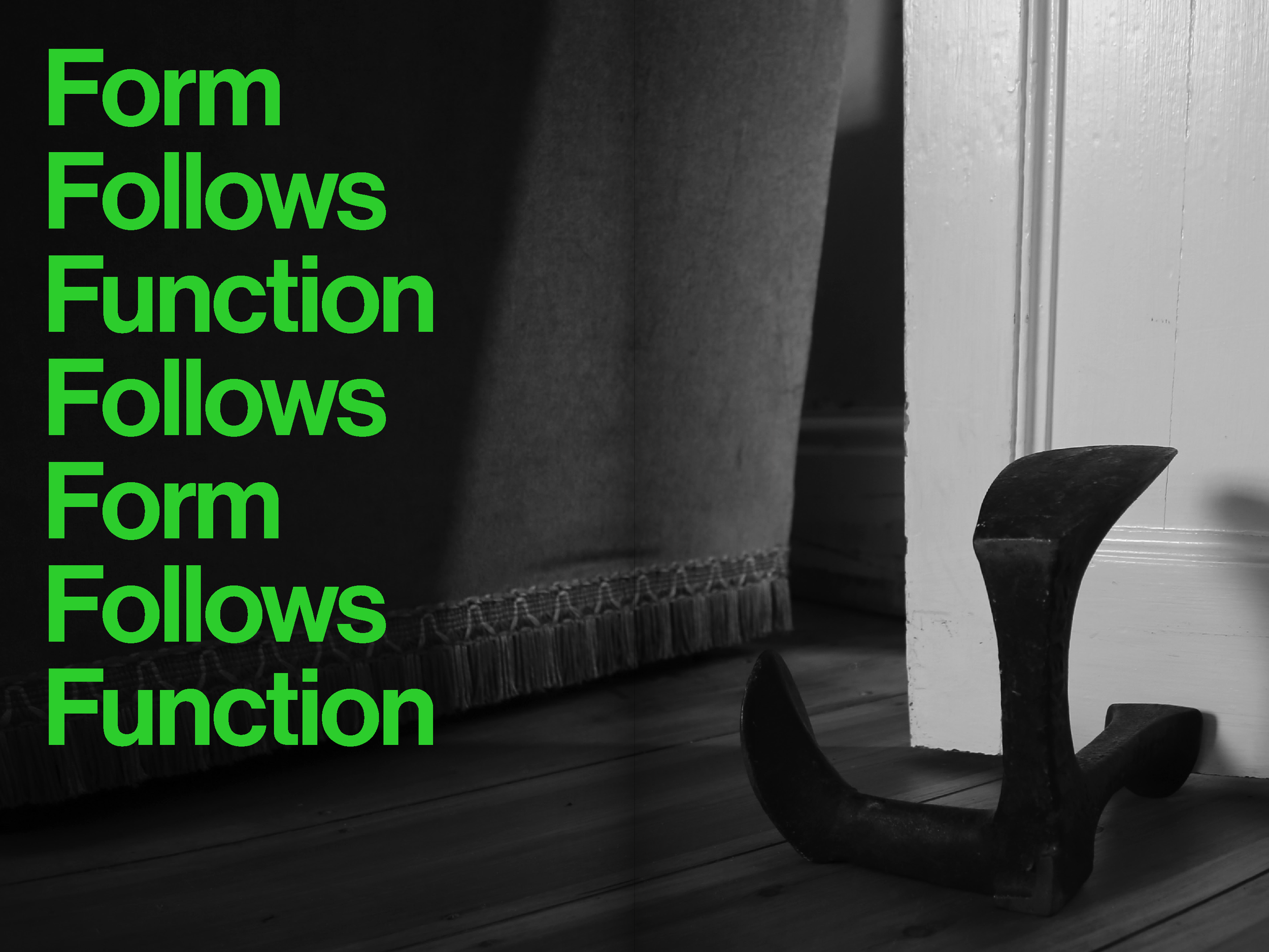
This is why I made ‘Purpose’ the first chapter of bad services, before ‘users’. Because without it, we have no chance of knowing who our users are, let alone what they need. The rule ‘form follows function’ applies just as much to services as it does to chairs, cars and buildings. Unless we know what function a service is supposed to deliver, it’s very difficult to define what form it should take
Finding our purpose is a lot harder than spotting when we dont have it
We need a clear sense of purpose most when the world around us changes, but by definition, these are the most difficult times to find it.

You can pre-order Bad Services now to find ways we can start to tackle this problem here and listen to our new episode on purpose