

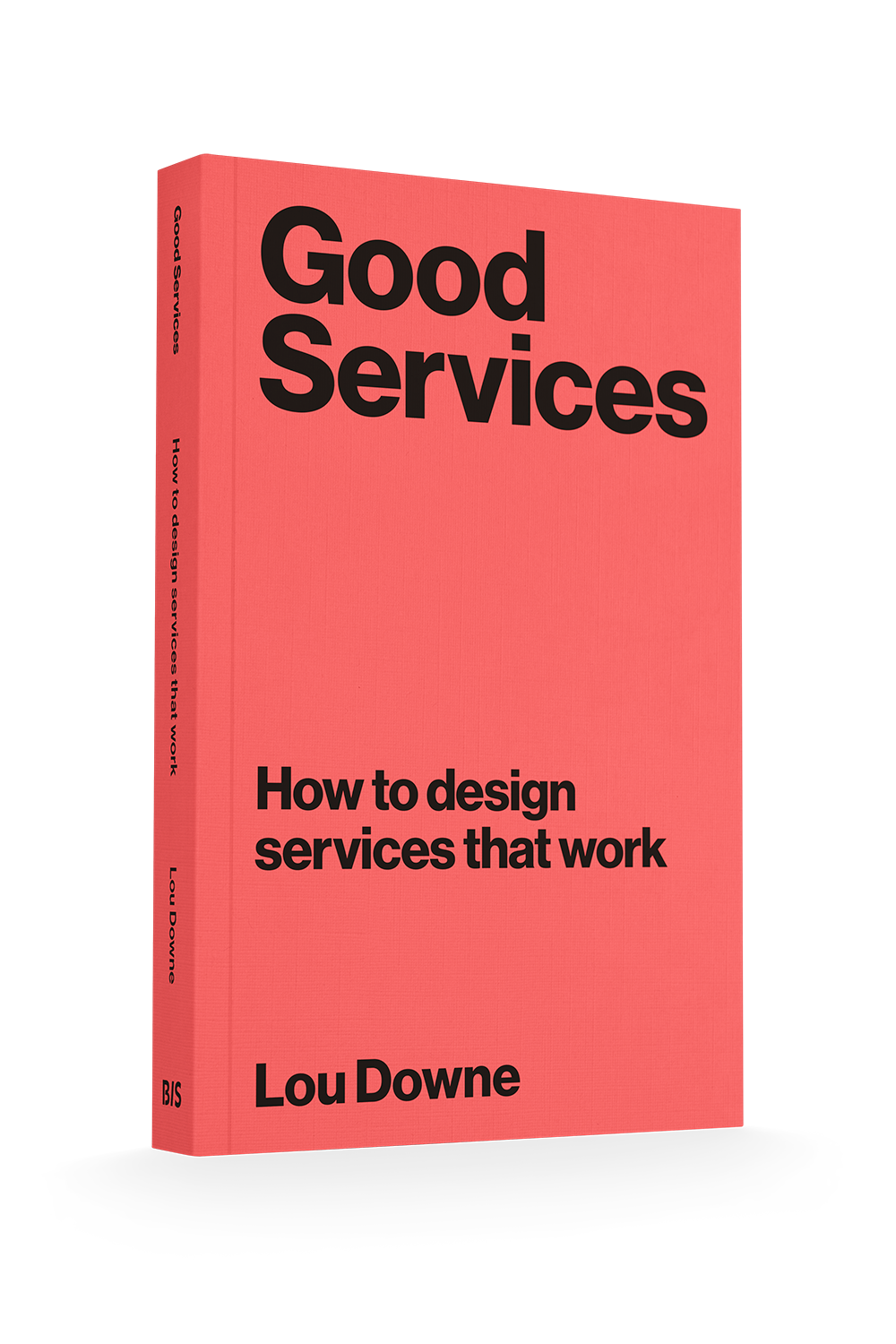
The bestselling book about how to design services that work
Good Services is the definitive guide to designing services that actually work. Most of the services we use every day weren't designed at all — built instead from a tangle of technological constraints, political decisions, and personal preferences, they overlook the one crucial thing users need: to be able to do what they set out to do with as little friction as possible.
Having sold over 30,000 copies globally, Good Services has become the must have companion for anyone who delivers, designs and manages services of any kind.
Buy Good Services
“This book is long overdue. It will become a must-read for the service design community, but this book is also for everyone working with services”
Marc Stickdorn
“If you’re looking for help in doing the right thing I have good news for you.
This book is going to help.
It’s brilliant!”
Mike Monteiro
“This book desperately needed to be written. Service design isn’t new, but these solid, measurable principles are. Lou has created a book that everyone needs to read”
Dana Chisnell

30000 copies sold, starting a global movement for Good Services
Most of the services we use every day aren’t designed to meet our needs. In fact, most of the services we use every day weren’t designed at all
In the rush to create new and innovative experiences, services today have overlooked the one crucial thing we need from them: to be able to do what we set out to do with as little friction as possible
This is book is not about ‘great services’, ‘unique services’, ‘thrilling’ or ‘magical’ services. It won’t tell you how to ‘wow’ your users with something they didn’t expect, or build something that the world has never seen before. This book will tell you how to design a service that your users can find, understand and use without having to ask for help.
It will tell you how to not disappoint your users, and make sure they can do the thing they set out to do
In a nutshell, it will help you to make services that work.
Knowing what good looks like for services isn’t just a nice to have, it’s vital if we are going to finally see services as things that need to be designed, and provide them in a way that is safe and sustainable, both for us and the world we live in.
As Marc Stickdorn says in his foreword, “this book is long overdue”.
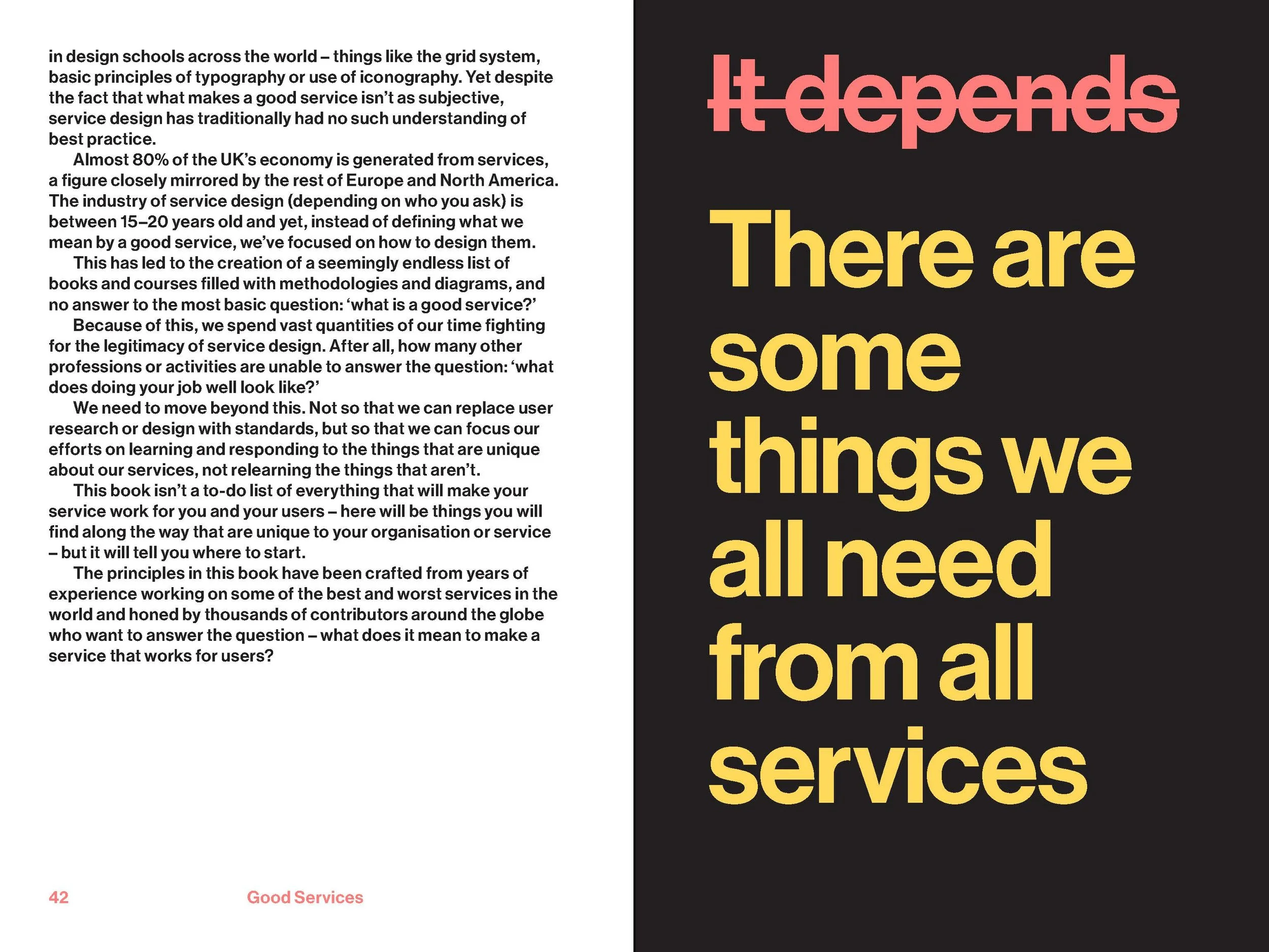
The resulting 15 principles of good service design in this book are the things that are universal to all services – whether that’s booking a flight or getting medical care. Each reflects one aspect of how to achieve ‘good’ for your users, your organisation and the world as a whole.
I hope this will become a supportive companion in your quest to make good services a reality
Lou Downe

Good Services Shop
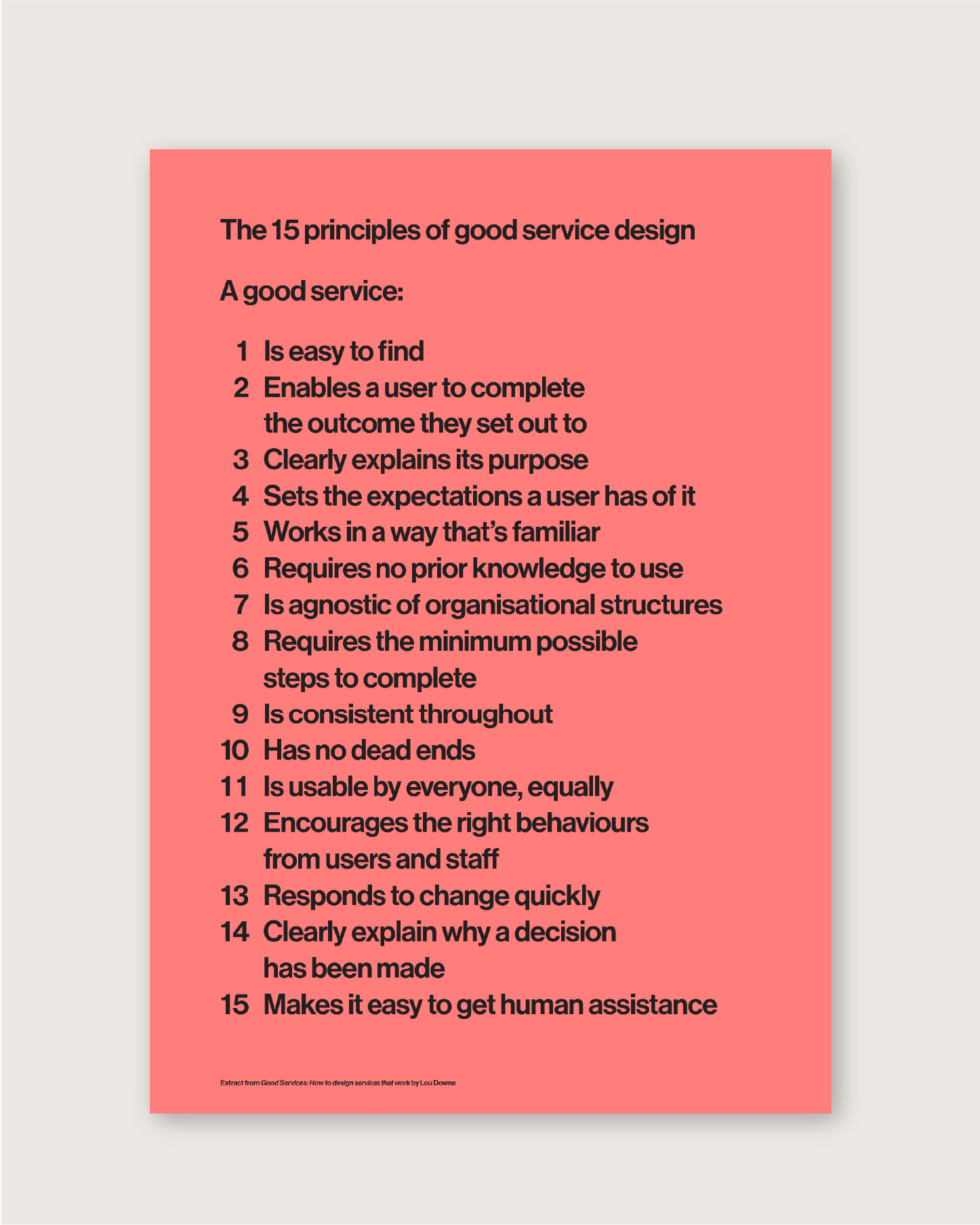
Bright fluoro litho print on heavy 200 gsm paper. Designed by the brilliant Daly Lyon
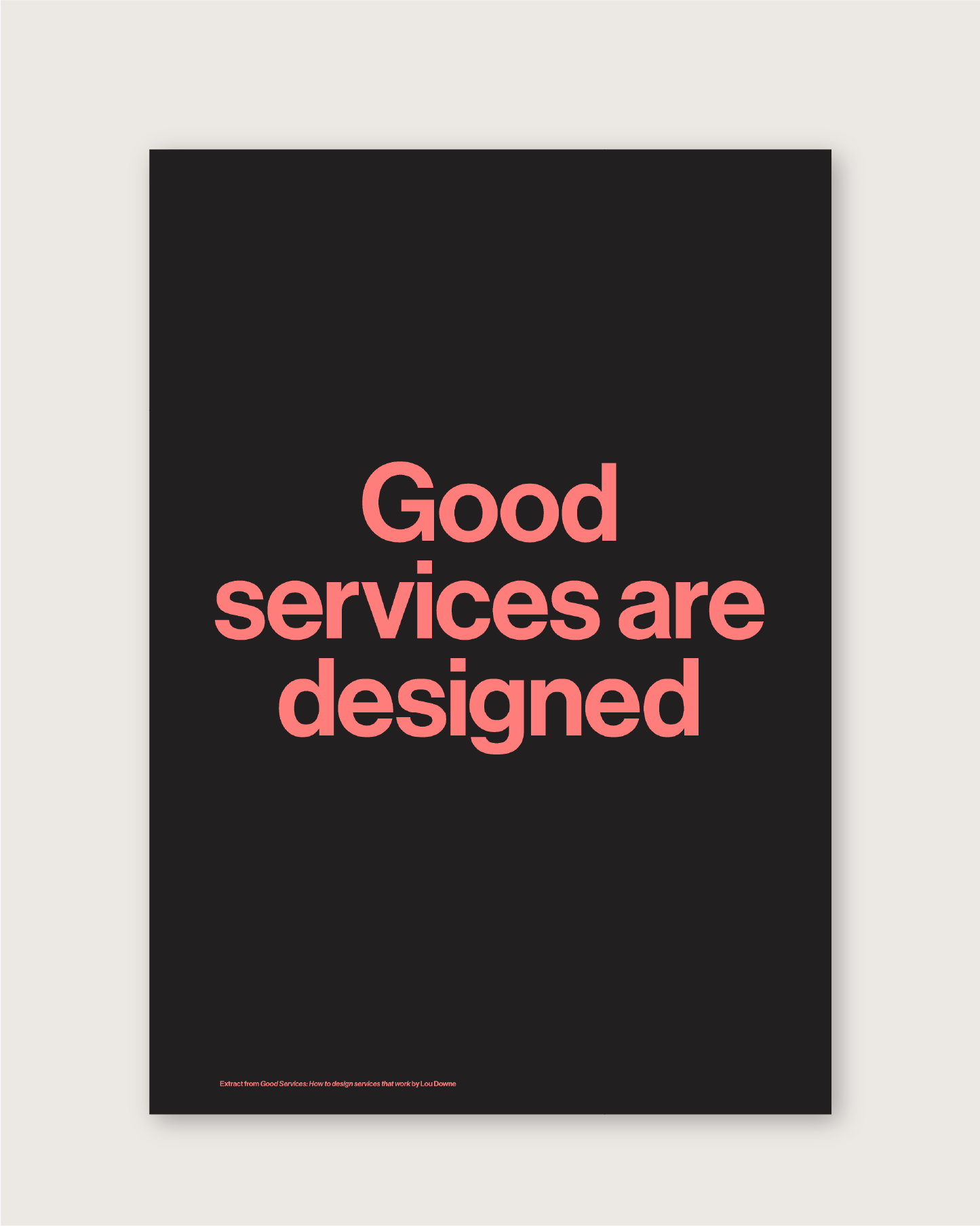
Bright fluoro litho print on heavy 200 gsm paper. Designed by the brilliant Daly Lyon
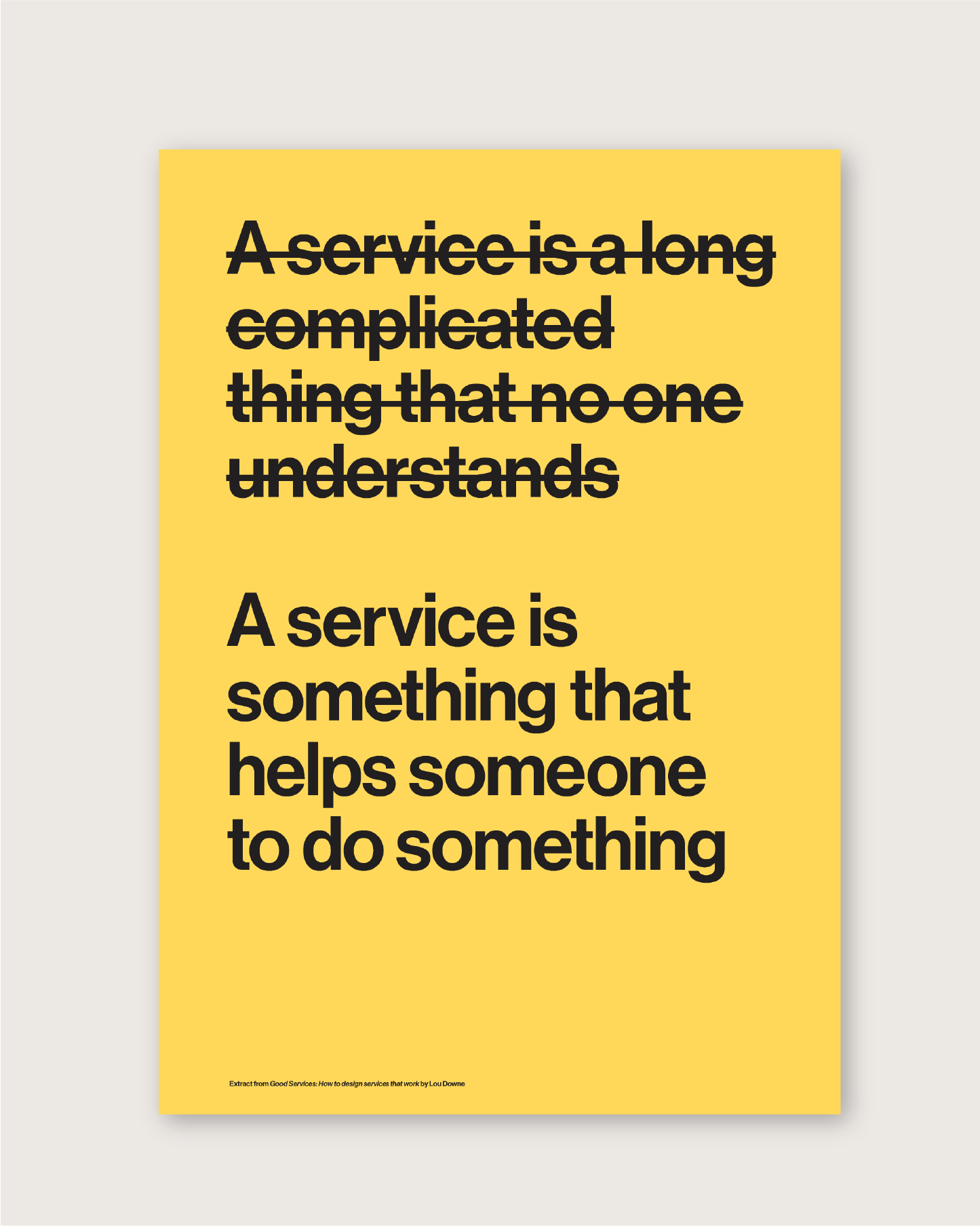
Bright fluoro litho print on heavy 200 gsm paper. Designed by the brilliant Daly Lyon
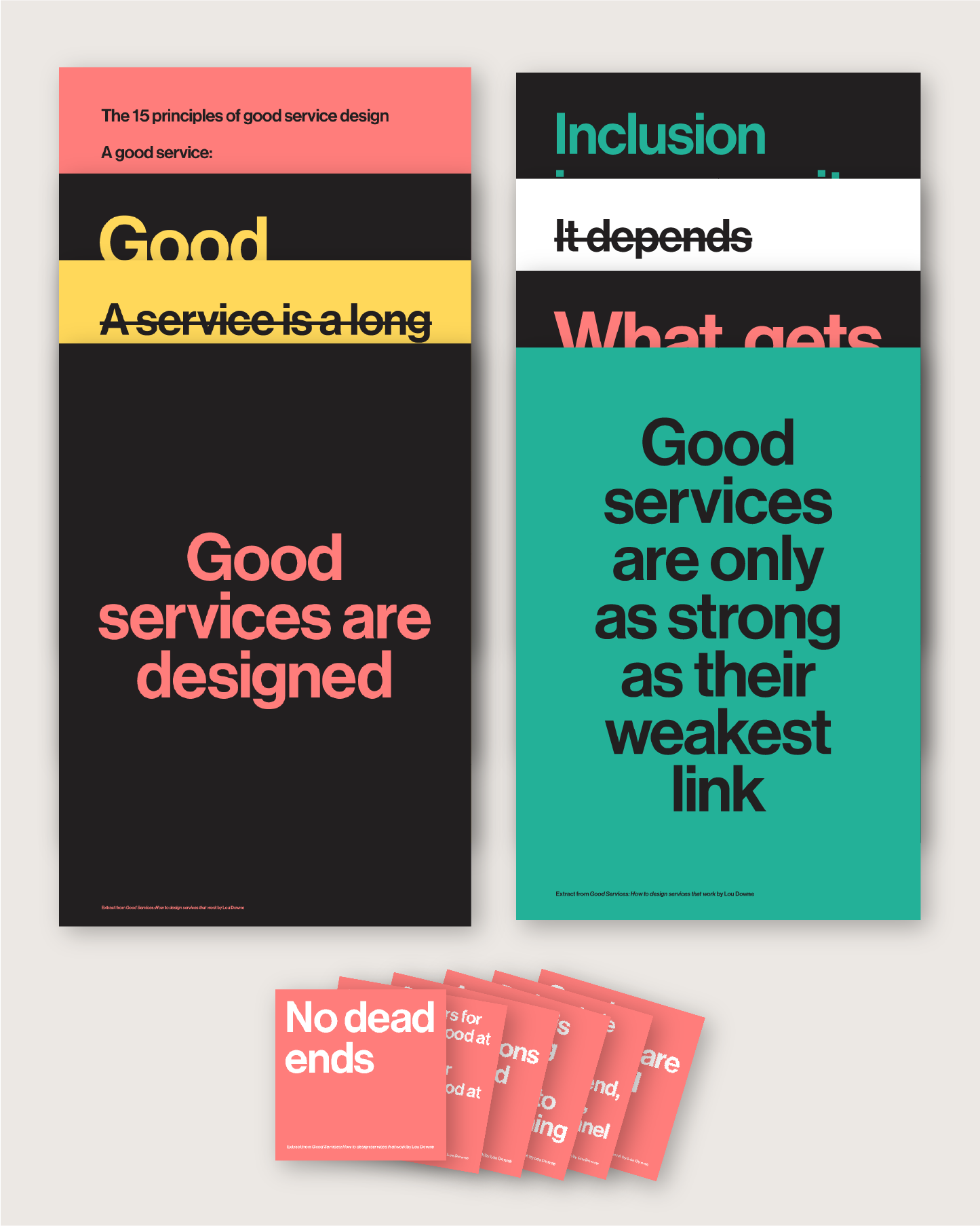
Two full sets of Good Services posters and two sets of all the stickers. Perfect for a big impact in a big space. Designed by the brilliant Daly Lyon.
8 x A3 posters, 8 x A2 posters, 3 x 11 stickers
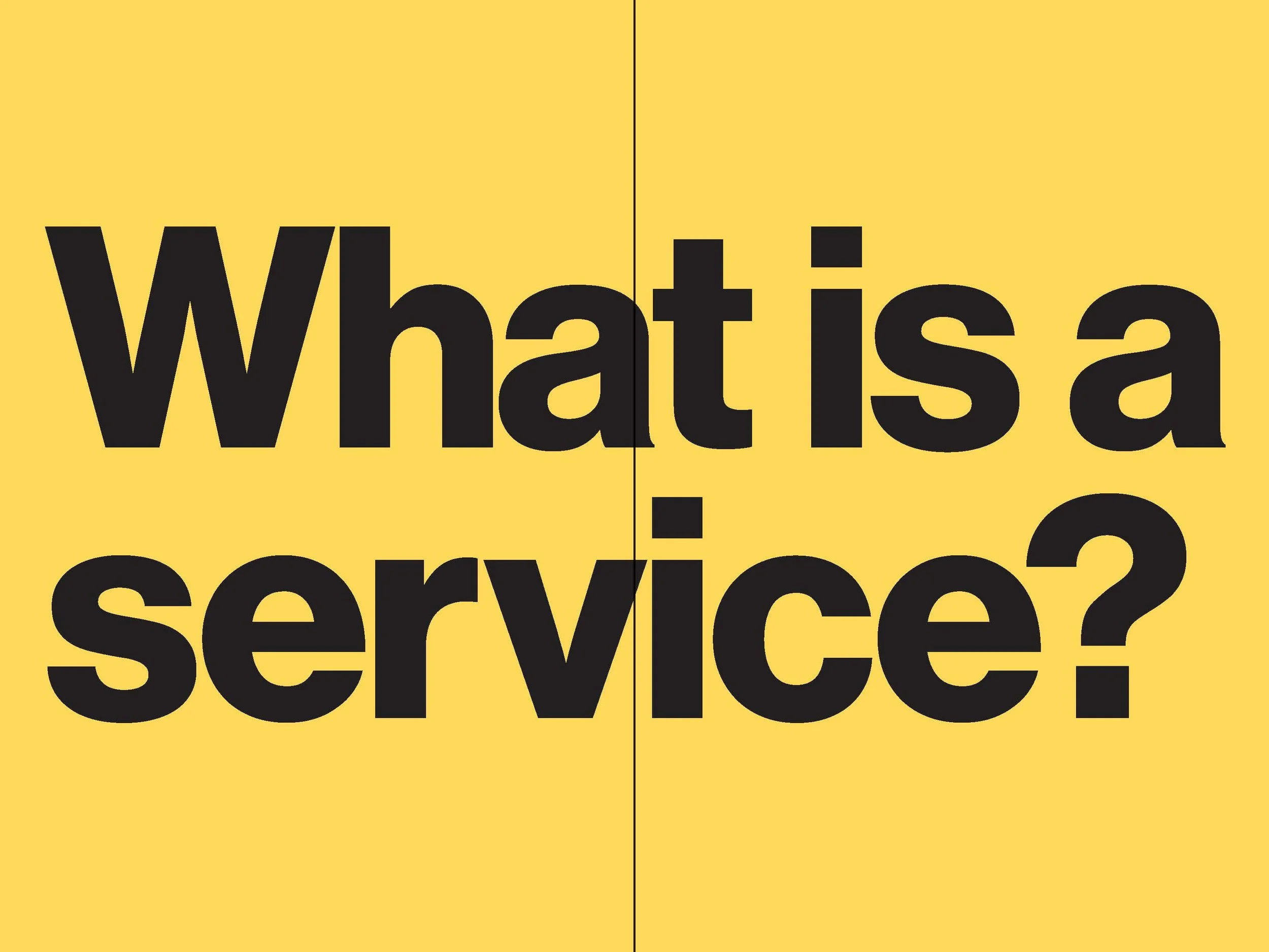
The 15 principles of good service design
15 core principles that all good services share, with simple easy to follow tips on how to make sure your service does the same
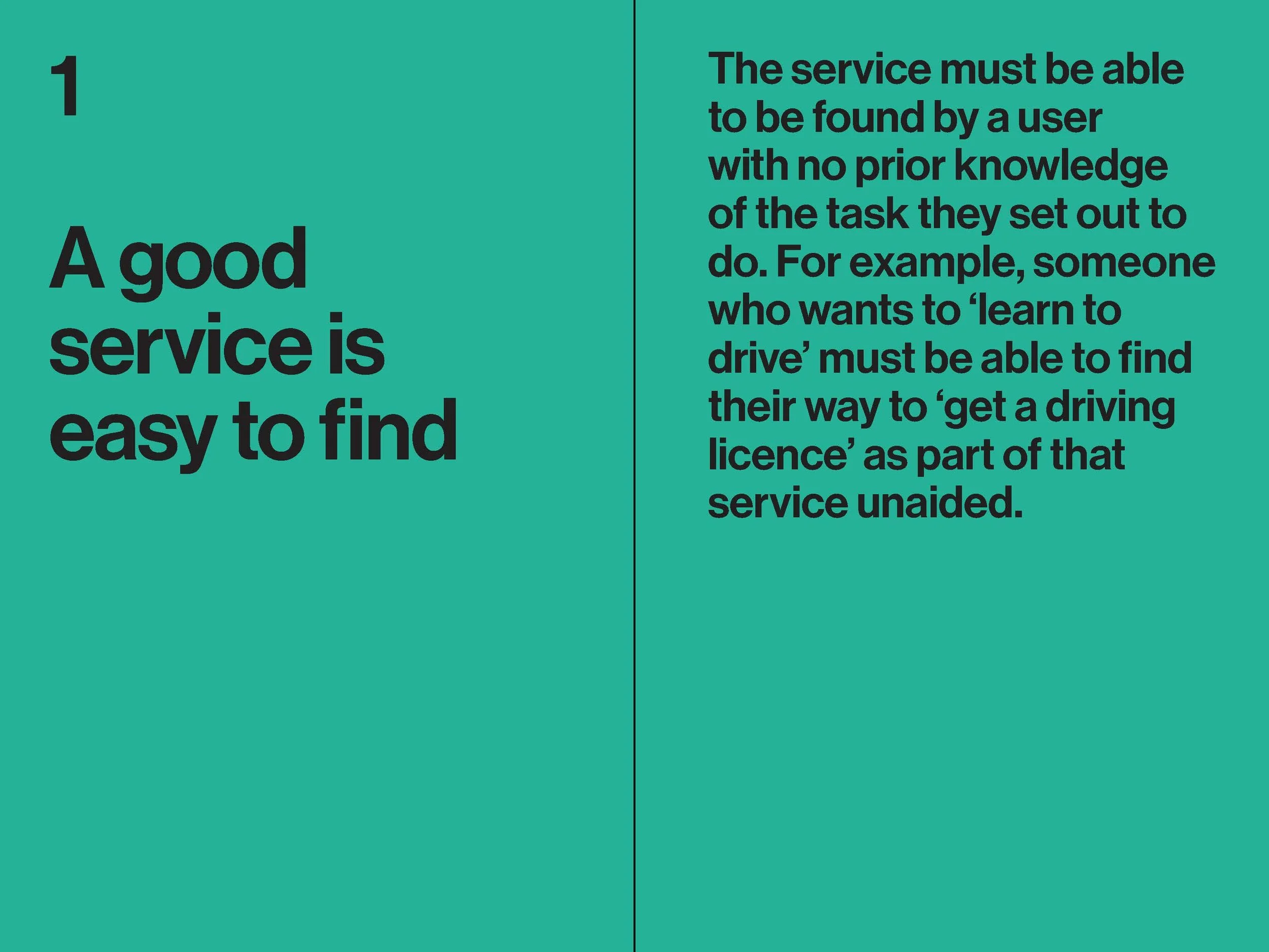
1
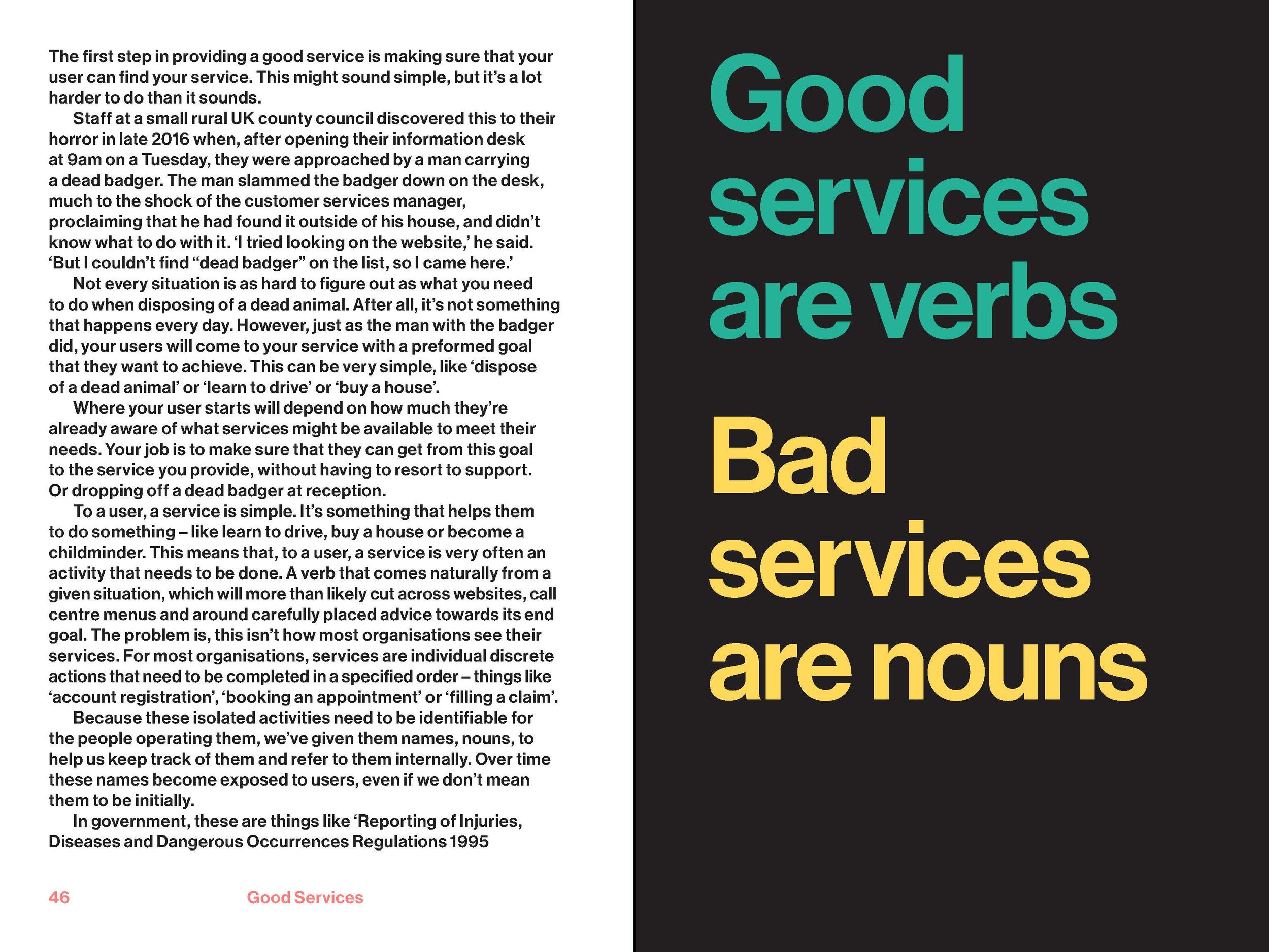
Good services are easy to find
In order for a user to use your service they first need to find it. This chapter covers how to make sure your users can find your service without any previous knowledge of it.
2
Good services explain their purpose
Once your user has found your service, they need to know what it’s for and whether it’s the thing they’re looking for. This chapter explains how to make sure that the purpose of the service is clear to users at the start of using it.
3
Good services set expectations
To help users plan and take control of their lives, they need to know what to expect from your service. This chapter describes how to make sure your service clearly explains what is needed from the user to complete it, and what they can expect your service.
4
Good services enable users to complete the outcome they set out to do
Possibly the most fundamental principle of all - for your service to work it has to enable them to achieve the goal they set out to achieve. This chapter explains how to make sure that a user can achieve the thing they set out to do - from the moment they consider doing something to the moment they have achieved their goal, including any steps needed to support the user after they have reached their goal.
5
Good services work in a way that is familiar
People base their understanding of the world on previous experiences. Services are no different. It’s important to understand established customs for your service, and when to conform or not conform to those customs so that your users can understand and navigate your service. This chapter shows you how to identify the types of experiences users bring to services, how they affect their experience of your service and what to do about them.
6
Good services require no prior knowledge to use
All too often we expect users to know how something works because we assume they’ve done it before. Good services are usable by everyone - including people who’ve never used them before. This chapter shows you how to make sure your service is usable by new and experienced users alike.
7
Good services are agnostic of organisational structures
Users shouldn’t need to understand how your organisation works in order to use your service, but this can sometimes be extremely difficult to achieve. This chapter explains how to minimise the effect of your organisation’s structure on your service.
8
Good services require the minimum possible steps to complete
Whether booking an expensive holiday or getting a passport - users want to get to their goal as efficiently as possible. This chapter explains how to make sure your service has the right amount of steps to help users get to that goal.
9
Good services are consistent throughout
Good services are consistent, but they’re not uniform. They should look and feel like one service throughout, but they should respond to an individual user’s needs and situation. This chapter shows how to balance the needs of users in order to be both consistent and responsive.
10
Good services have no dead ends
A service should direct all users to a clear outcome, regardless of whether the user is eligible or suitable to use the service. No user should be left behind or stranded within a service without knowing how to continue. This chapter explains how users get stuck in services, and how to avoid this happening.
11
Good services should usable by everyone, equally
All services must be usable by everyone who needs to use them, regardless of their circumstances or abilities. No one should be less able to use the service than anyone else. This chapter shows some of the major barriers to inclusion within services and how to avoid them.
12
Good services encourage the right behaviours from users and service providers
How you incentive, or disincentivise your users, staff and broader organisation can have a huge effect on how your service works.This chapter helps you to understand all of the things that can affect the behaviour of your users and staff, and how to make sure your service is encouraging the right behaviours.
13
Good services respond to change quickly
Good services respond quickly and adaptively to a change in a user’s circumstance and make this change consistently throughout the service. This chapter will help you to understand, plan for and handle changes in a users circumstance in the right way.
14
Good Services clearly explain why a decision has been made
When a decision is made within a service, it should be obvious to a user why this decision has been made and clearly communicated at the point at which it’s made. This chapter explains the common pitfalls in making and communicating decisions and how to avoid them.
15
Good services make it easy to get human assistance
Services should always provide an easy route for users to speak to a human if they need to. This chapter explains how to make sure your service uses human decisionmaking and contact in the right way for both your users, and the sustainability of your service