

The materials we use define how our services work
Services are defined by the materials we use to build them: those materials govern how our services work.
Take, for example, the various services we’ve used to wake up on time over the last three hundred years
Being ‘on time’ is such a deeply entrenched idea that it’s odd to think we haven’t always had to do it. In the UK, much of our sense of being ‘on time’ comes from the Industrial Revolution. From waking up on time (to start a shift at a factory) to having 3 meals a day (timed with your shift breaks).
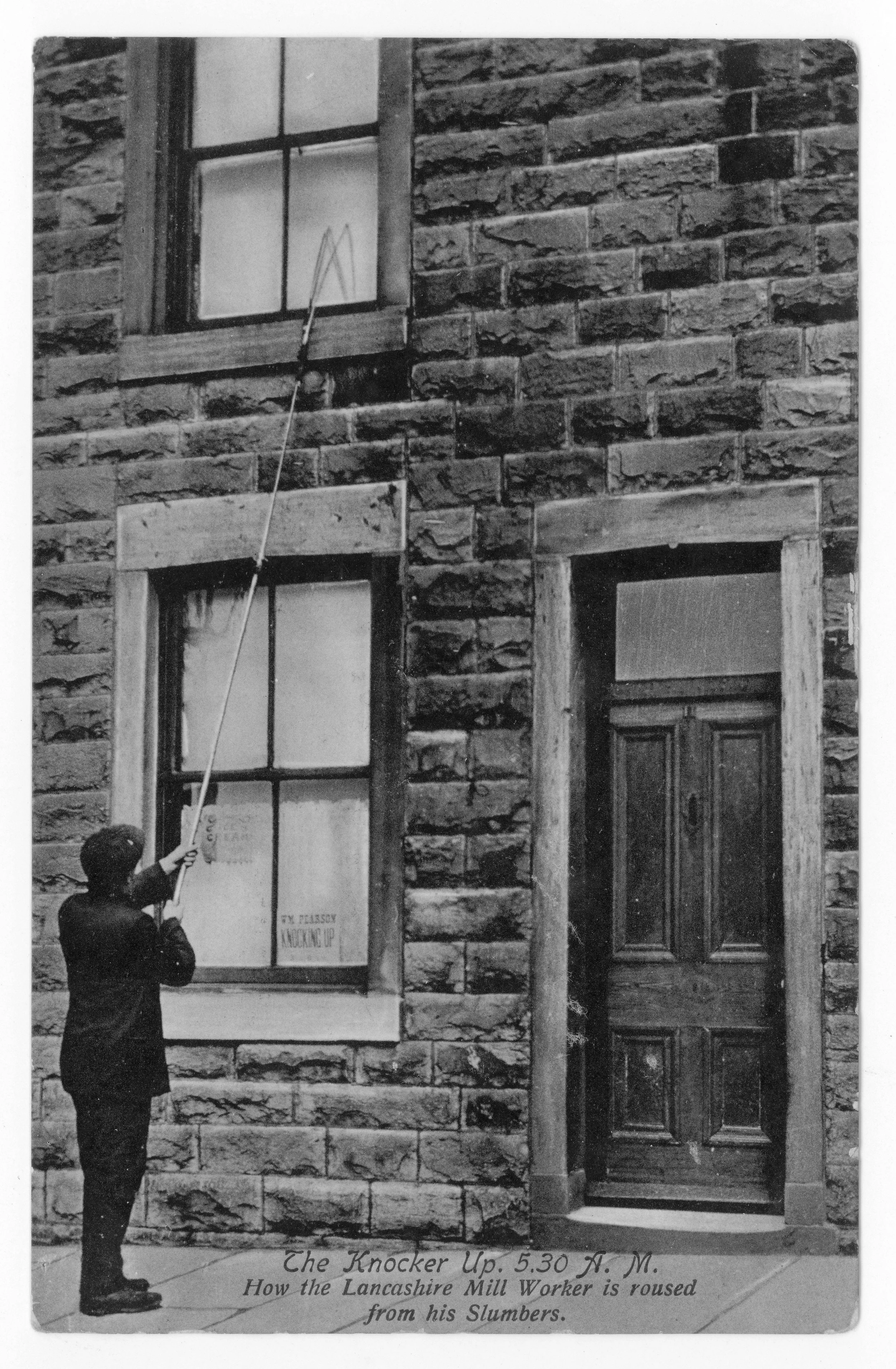
The need to get up on time, therefore, came with the dawn of mass factory working, when hundreds of people needed to get to the factory at the same time every morning. Alarm clocks were neither cheap nor reliable in the 1800s. Rather than shell out money for an expensive clock that might make you late for work, factory workers of England relied on something called ‘knocker uppers’.
Employing pea shooters, long wooden sticks and a variety of other methods, knocker uppers would wake you up at a time of your choosing. Some houses would have a slate outside with their shift times written on it for the knocker upper to read. Some factories even employed their own knocker uppers to wake up their workers on time. (Knocker uppers themselves were generally night owls and presumably not themselves reliant on the expensive and unreliable alarm clocks of the era.)
We still need to get up on time to get to work, but we don’t use knocker uppers today, as the world where alarm clocks are more expensive than local labour has melted away. Putting the history of technology change aside, the end of the knocker upper shows us how materials influence how we design, build and deliver services.
The user need has remained: how we meet it has transformed beyond recognition. Today, if you were in a kick-off workshop about creating a new service to help people manage their sleep and get up on time, you wouldn’t be writing: ‘Someone with insomnia comes around in the morning with a big stick and whacks your window for six pence,’ on a sticky note.
Expensive metals and rubbish tooling = knocker upper.
Cheap metals, new technologies and expensive local labour = an app on your phone.
Materials are strategic and they change how our services work
We run into problems when we don't realise this. This is the reason we see a service from a different era of technology get replatformed in a new technology era with little change in how it works (robotic AI knocker upper anyone?) or where we see ideas that are created that simply don't work with the technology at hand.
Why do we make these mistakes? The answer is often a complete detachment with the materials we use to deliver our services.
That’s why we say at The School of Good Services, care about the materials your services are delivered with. And with new materials (hello AI!) experiment and learn what they can and can’t do, where the risks and pitfalls are, and what impact this will have on how you need to take decisions at your organisation.
For a while, we took alot of paper forms and put them online as PDFs. This isn’t service responding to new materials, it’s the opposite.
We recognise it is hard for organisations, there’s often a disparity between their skills, abilities and money to be able to keep up with fast moving, and sometimes expensive world of constantly changing technology and expectations.
But there are ways you can learn about the materials of your service, to enable leadership to agree to a strategic route forward for your services and how they can and should evolve. Experiment, play, interrogate materials, create the space for makers to work with you and explore what’s possible. And leaders, care about the materials, sweat the detail, don’t detach from it and reflect on how you currently operate might need to change.
If you’re interested in more of this, check out the book Bad Services, and our podcast episode on Materials.