

Introducing Bad Services
Every year we spend an estimated 15 billion hours in the UK ‘administering our personal lives’
That’s roughly an hour per day, or just over a month per year, that we each spend paying bills requesting refunds, locating lost pensions, making a complaint, resetting lost passwords and a plethora of activities involved in ‘life admin’.
At a median average hourly wage, that time is worth £200 billion to the UK economy per year, or it would be if we weren’t spending it waiting on hold. This ‘wasted time’ is worth more than the entire construction industry (£138bn) or about the same as food retail (£203bn). On a personal level, it’s hard to put a price on a month of every year of our lives.
Why, despite advances in technology, does fulfilling our basic needs still dominate so much of our time and involve wrangling a seemingly endless sludge of just-good-enough-not-to-get-sued services?
The answer is simple, but the solution isn't.
Something strange happens to services as they grow and get older. What starts as a deep connection to our users and what they need from us gets lost as we scale. Over time we become detached from the reality of how our services are experienced by the people who use them.
We do this for lots of reasons. Sometimes the scale of our service means we rarely see our users, sometimes we think it doesn't matter that the service doesn't work because our users don't have a choice of using it, sometimes our service becomes so bad that we start to dislike our users for their constant complaints and ‘failure’ to use our service. Whatever the reason, the result is the same; a detachment from the reality of how our services are experienced. As a result, we don't see the impact our decisions have on our users, and we don’t see the impact of our users’ problems on our organisation.
The vital feedback loop that we rely on to see problems, know what impact they’re having and know what we should do to solve them has been severed. The result? Services that get worse rather than better over time.
Service design is 10% design, 90% creating the conditions for design to happen.
Good Services taught us that there are some things that all users need from all services. Bad Services shows that there are also some things that all organisations need to be able to do in order to deliver services that work.
Good Services came out nearly 6 years ago. Having now taught thousands of people at the School, the content from that book is more relevant now than ever.
In a way though, Good Services is a sequel to a book I forgot to write. Before we create services that work for users, we have to ask ourselves the question, why hasn't this already happened? What led this service to be in the state of poor design it’s currently in? Why are we now struggling to convince people to make it better? And crucially, how do we stop it from getting worse again in the future? In a word - why is service design so damn hard and how do we make the 90% of our work slightly easier.
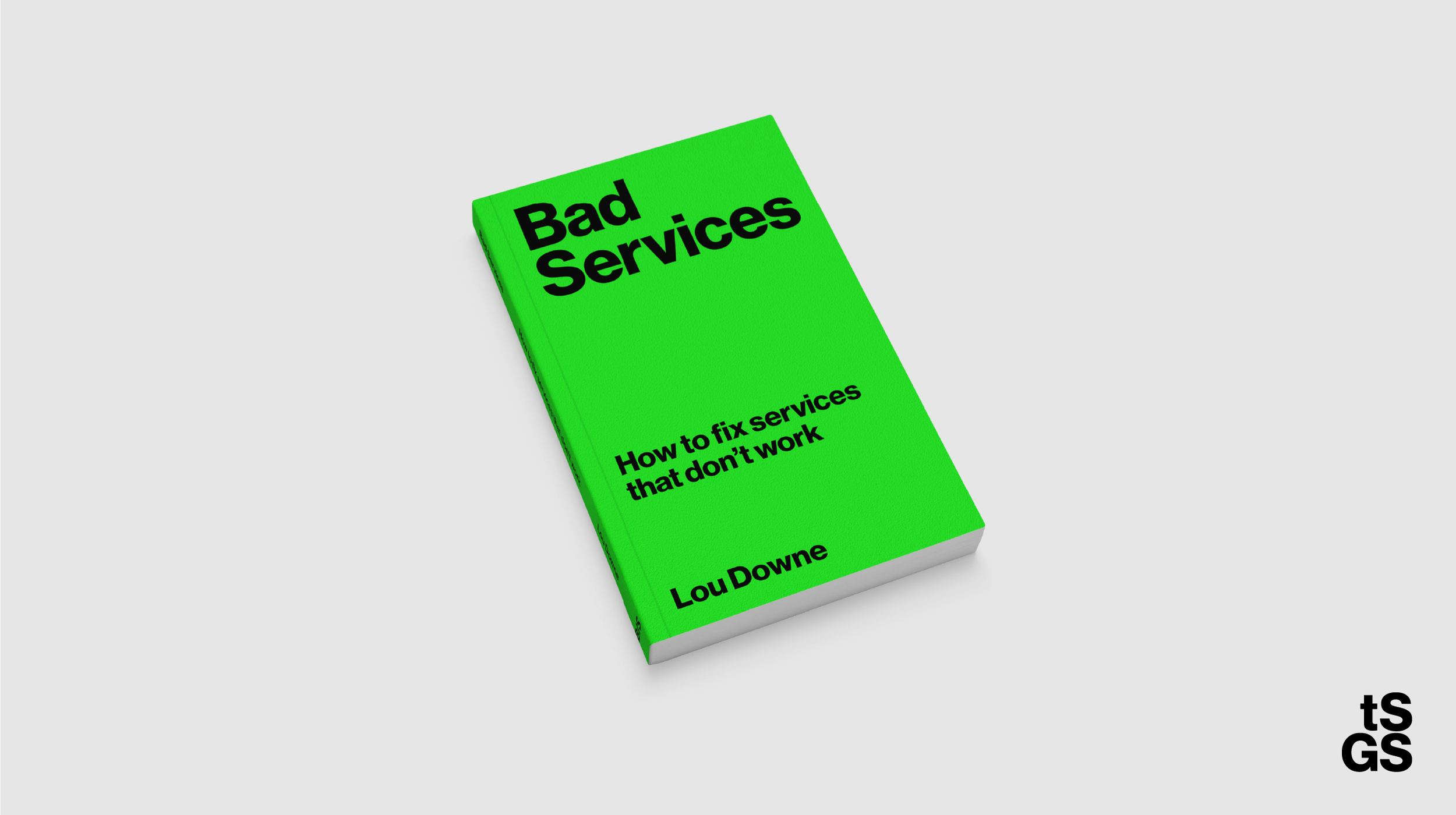
This is why I wrote Bad Services.
It’s an answer to why we produce services that don't work for users and what we can do to avoid this from happening. This book will help you see the universal challenges we all face when delivering good services. You'll learn how to identify the root cause of these issues and build simple, straightforward ways to solve them, with or without buy-in.
There are many books out there that will help you to design a service that works in the present (Good Services is one of them). Bad Services helps us to go beyond this and understand how we create the conditions for good services to thrive in the future.
Whether you're a designer, a service owner or a change-maker, this book offers clear and straightforward steps to overcome the barriers to good service delivery. It untangles why, despite our best efforts, organisations struggle to deliver services that work, and will help you to learn ways to avoid them.
Sign up here to get first access to the pre-sale link and exclusive news and content from the book, Bad Services.